
Why Is My Car Grinding When I Brake? Common Causes and Fixes
There are few sounds more alarming to a driver than the harsh, metallic grinding noise that can sometimes happen when you press the brake pedal. This isn’t a sound you should ever ignore.
While a high-pitched squeal from your brakes can sometimes be a minor issue, a grinding sound almost always indicates a serious problem that needs immediate attention.
This noise is a clear signal that key components of your braking system are in distress. Continuing to drive with grinding brakes is not only unsafe, as it can significantly increase your stopping distance, but it can also turn a relatively simple repair into a much more expensive one.
This guide will explain the most common causes of grinding brakes and what you should do when you hear this critical warning sign.
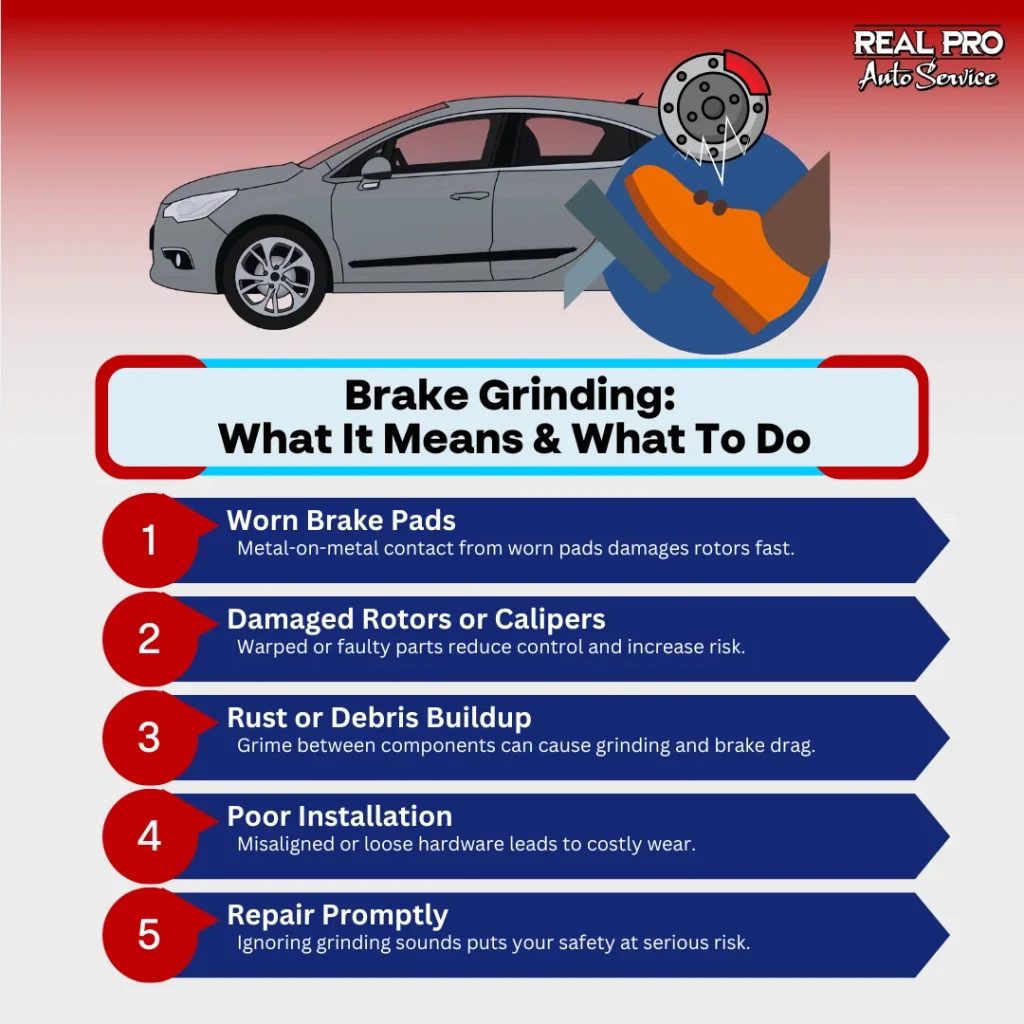
Key Takeaways
- Worn-out brake pads can directly contact the rotors, causing grinding sounds and significant damage.
- Damaged rotors or calipers may lead to improper contact, resulting in grinding noises.
- Debris or rust buildup between brake components can hinder movement, causing grinding when braking.
- Faulty brake installation or misalignment can create grinding sounds during braking.
- Schedule a professional inspection immediately to address the issue and prevent costly repairs.
What Brake Grinding Sounds Like—and Why You Shouldn’t Ignore It
When you hear grinding sounds while braking, it’s important to recognize how they differ from squeaking noises.
Grinding usually indicates that your brake pads are worn down, leading to serious issues if left unchecked.
Ignoring these sounds could compromise your brake system and your safety on the road.
Identifying the difference between squeaking and grinding
Although both squeaking and grinding sounds can indicate issues with your brakes, they signal different levels of wear and potential damage.
Squealing usually happens when brake pads are worn down and need replacement, often caused by a wear indicator designed to alert you. It’s a higher-pitched noise that’s annoying but not immediately dangerous.
In contrast, grinding brakes often indicate that the brake pads are completely worn out, leading to metal-on-metal contact. This sound is more severe and can result in significant damage to your brake rotors, necessitating costly repairs.
So, when you hear squealing vs grinding brakes, pay close attention: squealing may be a warning, but grinding is a call to action you can’t ignore.
What does grinding usually signal about your brake system
Hearing grinding noises from your brakes can be alarming, as it often signals serious issues within your brake system. One of the most common culprits is worn brake pads.
When the pads wear down, metal backing plates can scrape against the rotor, creating that grinding sound.
This is a clear indicator of worn brake pads symptoms, and ignoring it can lead to further damage, such as rotor wear or complete brake failure.
Professional brake repair at our shop in Grand Rapids can diagnose and fix grinding brake issues before they worsen.
Common Causes of Grinding Noises When Braking
When you hear grinding noises while braking, it’s often a sign that something’s wrong. Common culprits include worn-out brake pads, damaged rotors, or even debris stuck between components.
Understanding the complete guide to brake fluid maintenance helps you maintain your entire braking system.
Worn-out brake pads are making contact with rotors
If you notice a grinding noise while braking, it could be a sign that your brake pads are worn out and making direct contact with the rotors. This contact can create a loud, unpleasant sound and indicate that your brake pads need immediate attention.
When brake pads wear down, they lose their ability to grip, leading to metal-on-metal contact that damages both the pads and the rotors. Ignoring this issue not only compromises your vehicle’s braking efficiency but can also lead to more expensive repairs down the line.
To keep your car safe and in good condition, check your brake pads regularly and replace them when they’re worn out.
Addressing worn-out brake pads are making contact with rotors promptly can save you time and money.
Damaged rotors or calipers
Worn-out brake pads aren’t the only reason for grinding noises when you brake. If your brake rotors or calipers are damaged, you might experience this alarming sound.
Damaged brake rotors can become warped or uneven, causing them to make contact with the brake pads improperly.
Learning about brake pads and rotors and when to replace them helps you understand your braking system better.
Debris or rust buildup between components
Debris or rust buildup between your brake components can also cause those unsettling grinding noises.
Over time, dirt, dust, and rust can accumulate, particularly around the brake calipers, which can lead to brake caliper issues.
When this buildup occurs, it can hinder the proper movement of the caliper and the brake pads, resulting in metal-on-metal contact that causes that dreaded grinding sound.
To resolve this, it’s vital to inspect the brake system regularly. A thorough cleaning can often remove the debris or rust buildup between components, allowing everything to function smoothly again.
If the issue persists, it might be time to replace the affected components to guarantee your safety on the road. Regular maintenance can prevent these noises and keep your brakes in top shape.
Frequently Asked Questions
Can I Drive My Car if It’s Grinding While Braking?
If your car’s grinding while braking, it’s not safe to drive. You risk further damage and potential accidents. It’s best to have it inspected and repaired before getting back on the road.
You should replace your brake pads every 30,000 to 70,000 miles, depending on your driving habits and vehicle type.
Understanding how often you should replace your brake pads helps you maintain safe braking performance.
What Are the Signs of Worn Brake Rotors?
You might hear a squealing or grinding noise when braking, feel vibrations in the pedal, or notice your car pulling to one side.
If that happens, it’s likely time to check your brake rotors.
How Grinding Affects Your Vehicle’s Safety and Performance?
Brake grinding doesn’t directly affect your car’s fuel efficiency, but it can indicate other issues that might.
If your brakes are working harder, it could lead to increased fuel consumption, so it’s best to address it.
Yes, there are different types of brake pads to evaluate. Organic, semi-metallic, and ceramic pads each have unique benefits.
Choosing the right one depends on your driving style, vehicle type, and desired performance characteristics.
What is the difference between brake squeaking and grinding?
Brake squeaking and grinding are both signs of a potential issue, but they usually indicate different levels of severity.
A high-pitched squeak is often the sound of the brake pad wear indicator. This is a small metal tab built into the brake pad that makes contact with the rotor when the pad material gets low.
It’s an early warning system designed to tell you it’s time to get your brakes checked soon.
Grinding, on the other hand, is a much more serious sound. It’s a harsh, metallic scraping noise that typically means the friction material on the brake pads has completely worn away.
The sound you’re hearing is the metal backing plate of the brake pad grinding directly against the metal brake rotor.
This not only severely reduces your stopping power but also causes significant damage to the rotor.
How long can you drive with grinding brakes?
You should not drive with grinding brakes any longer than is necessary to get to a safe location or a repair shop.
A grinding noise indicates that your brake pads are completely worn out and you are now creating metal-on-metal contact.
Every time you press the brake pedal, you are actively damaging the brake rotors, which can turn a simple brake pad replacement into a much more expensive rotor and pad replacement.
More importantly, your ability to stop the car is significantly compromised. Your stopping distance will be much longer, and in an emergency, the brakes could fail completely.
If you hear a grinding sound, the only safe course of action is to stop driving and have your brakes inspected immediately.
Conclusion
A grinding noise when you brake is your car’s way of screaming for help. It’s a critical safety warning that should never be ignored.
This sound almost always points to a severe issue, like completely worn-out brake pads, that is actively damaging your braking system and compromising your ability to stop safely.
If you hear grinding, the best and only course of action is to stop driving and have your vehicle inspected by a professional right away.
Addressing the problem immediately will not only keep you safe but will also prevent a simple repair from turning into a major, costly one.
For drivers in communities like Wyoming, Michigan, having access to a trusted local mechanic is essential for addressing such urgent safety issues.
For any brake issues, it’s always best to seek professional repair for your car in Grand Rapids.