How to Identify and Fix Leaks in Your Car’s Cooling System
Seeing a puddle of brightly colored fluid under your car is a sinking feeling every driver dreads. That puddle is often a sign of a coolant leak, which is a problem you should never ignore.
Your car’s cooling system is responsible for keeping the engine at a stable operating temperature, and a leak can quickly lead to overheating and catastrophic engine damage.
While the thought of a leak can be intimidating, many of the common causes are surprisingly simple to identify and fix. From a loose hose clamp to a worn-out gasket, a little bit of detective work can go a long way.
This guide will help you understand the signs of a coolant leak, pinpoint the most common sources, and walk you through the steps to get your cooling system back in top shape.
Key Takeaways
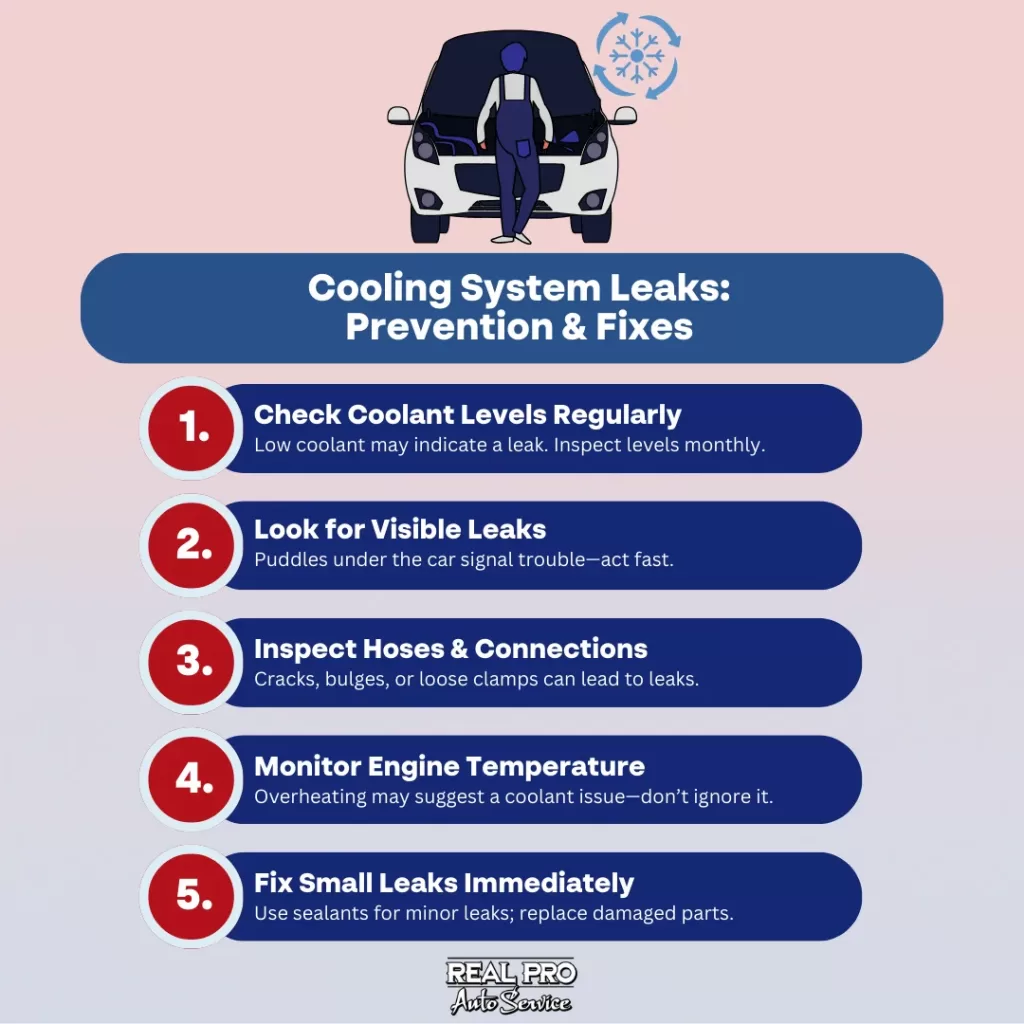
- Regularly check coolant levels and inspect for puddles under the vehicle to identify potential leaks early.
- Examine hoses and connections for cracks, bulges, or looseness that may indicate leaks in the cooling system.
- Monitor engine temperature while driving; overheating may signify a coolant leak requiring immediate attention.
- Use sealants for minor leaks, but replace damaged hoses, gaskets, or radiators for persistent issues.
- Consult a professional for complex problems like blown head gaskets to ensure proper diagnosis and repair.
Understanding Coolant Leaks
When you notice your engine running hotter than usual, it might be a sign of a coolant leak.
Understanding coolant leaks is vital for maintaining your vehicle’s health. They can lead to serious engine damage if not addressed promptly.
First, check your coolant levels regularly; if they’re consistently low, that’s a red flag. You may also see puddles of coolant under your car or hear hissing sounds when the engine heats up. If you suspect a leak, it’s important to pinpoint the source.
To fix a coolant leak, you might need to replace hoses, tighten clamps, or use sealants for minor leaks.
If you’re unsure, consult a professional to guarantee your cooling system’s integrity remains intact.
COMMON SOURCES OF COOLANT LEAKS
When it comes to coolant leaks, knowing the common culprits can save you time and money.
You might find issues like a blown head gasket or a damaged heater core lurking under the hood.
Let’s explore these potential sources to help you identify what’s going wrong with your cooling system.
1. A BLOWN HEAD GASKET
A blown head gasket is one of the most serious sources of coolant leaks in your vehicle. It can lead to significant engine damage if not addressed promptly. Symptoms include overheating, white smoke from the exhaust, and coolant in the oil.
If you suspect a blown head gasket, it’s essential to act quickly. Ignoring this issue can result in costly repairs down the line. The cooling system leak repair cost can vary, but it’s often higher due to the extensive labor involved in replacing a head gasket.
Don’t wait until the problem worsens; consult a certified technician to diagnose and fix the issue.
Taking the initiative can prevent more serious harm and financial difficulties.
2. A DAMAGED HEATER CORE
One common source of coolant leaks is a damaged heater core, which can wreak havoc on your vehicle’s heating system and lead to overheating.
If you notice a sweet smell inside your car or a wet carpet, your heater core might be the culprit. To diagnose the issue, check for coolant pooling under the dash or around the heater core.
If you find a leak, you’ll need to replace the heater core, as patching it isn’t a reliable solution. To fix a cooling system leak, consult a professional mechanic who can guarantee proper installation and prevent future problems.
Addressing a damaged heater core promptly can save you from more extensive repairs down the road, keeping your vehicle running smoothly.
3. A CRACKED OR DAMAGED HOSE
After addressing the potential issues with a damaged heater core, it’s important to contemplate other common sources of coolant leaks, such as cracked or damaged hoses.
Hoses in your cooling system can wear out over time due to heat and pressure, leading to leaks. Inspect your hoses for visible cracks, bulges, or soft spots, as these can indicate deterioration.
If you notice any issues, it’s essential to fix leaking coolant promptly to avoid overheating your engine. Replacing a damaged hose is often a straightforward task, but if you’re unsure, it’s wise to consult a professional.
Addressing these problems early can save you from more extensive repairs down the road and keep your vehicle running smoothly.
4. LOOSE OR WORN-OUT HOSE CONNECTIONS
Loose or worn-out hose connections are another common source of coolant leaks that can lead to serious engine issues.
Over time, the clamps securing the hoses can weaken, causing coolant to escape. You might notice puddles under your car or a drop in coolant levels, signaling a problem. To address this, inspect the connections regularly and tighten any loose clamps.
If the hoses themselves are worn, replacing them is essential. You may be wondering how much for coolant leak repair; costs can vary based on the extent of the damage and labor involved.
However, addressing these issues promptly can save you from more expensive repairs down the line. Keep an eye on those connections to maintain your vehicle’s health.
5. A BROKEN RADIATOR
A broken radiator can lead to significant coolant leaks, jeopardizing your engine’s performance. If you notice coolant pooling under your car or see steam rising from the engine bay, it’s time to inspect your radiator.
Look for cracks, corrosion, or other signs of damage. If you find any issues, you might need cooling system leak repair to address the problem.
Sometimes, a simple patch or sealant can fix minor leaks, but in cases of severe damage, a radiator replacement may be necessary. Regularly checking your radiator can help prevent unexpected breakdowns and maintain your vehicle’s efficiency.
Don’t ignore these signs; addressing a broken radiator promptly can save you from costly repairs down the road.
Finding Coolant Leaks
While driving, you might notice your engine running hotter than usual, which could indicate a coolant leak.
Start by checking the ground under your car for any puddles of coolant, which typically appear green, orange, or pink.
Next, inspect the hoses connected to the radiator and the water pump for cracks or loose fittings. Don’t forget to examine the radiator itself for signs of corrosion or damage. If you find anything suspicious, it’s vital to act quickly.
Knowing who can fix a coolant leak is essential, as a professional can locate and repair the issue effectively.
Ignoring a coolant leak can lead to severe engine damage, so it’s best to address it as soon as possible.
Fixing Coolant Leaks
To tackle a coolant leak effectively, start by identifying the source of the problem. Once you’ve pinpointed it, you can determine if it’s an easy fix.
Here are three steps to help you:
- Tighten Connections: Sometimes, a loose hose or clamp is all that’s causing the leak. Tightening can often resolve the issue.
- Use Sealants: If the leak’s minor, a radiator sealant might do the trick. Just follow the product instructions carefully.
- Replace Components: If the leak persists, you may need to replace hoses, gaskets, or the radiator.
Frequently Asked Questions
What Are the Symptoms of a Coolant Leak?
If you suspect a coolant leak, you might notice overheating, a sweet smell, or puddles under your car. Check your coolant levels regularly to catch any issues before they become serious problems.
How Often Should I Check My Coolant Levels?
You should check your coolant levels regularly, ideally every month or before long trips. Keeping an eye on it helps prevent overheating and maintains your engine’s health, ensuring your vehicle runs smoothly and efficiently.
Can I Drive My Car With a Coolant Leak?
Driving with a coolant leak’s like sailing with a hole in your boat; it’s risky. You can, but it’s unwise. Overheating could occur, leading to costly repairs. It’s best to get it checked immediately.
What Happens if I Ignore a Coolant Leak?
If you ignore a coolant leak, your engine could overheat, leading to severe damage. You might face expensive repairs, decreased performance, and even complete engine failure. It’s best to address leaks promptly to avoid these issues.
How Much Does It Cost to Fix a Coolant Leak?
Fixing a coolant leak typically costs between $100 and $1,000, depending on the severity and location of the leak. It’s best to get a quote from a trusted mechanic to understand your options.
Is it safe to drive with a coolant leak?
Driving with a coolant leak is a significant risk that can lead to severe and expensive engine damage. Coolant, or antifreeze, is essential for regulating your engine’s temperature.
When there is a leak, the system loses its ability to cool the engine effectively, which can cause it to overheat. An overheating engine can warp cylinder heads, blow a head gasket, or even seize up completely, resulting in repairs that can cost thousands of dollars.
If you notice your temperature gauge climbing into the red, see steam coming from under the hood, or find a puddle of coolant under your car, you should stop driving as soon as it is safe to do so.
While a minimal leak might allow you to drive a short distance to a repair shop, continuing to drive with a significant leak is a gamble you do not want to take.
What is the most common cause of a coolant leak?
The most common cause of a coolant leak is a failure in one of the rubber hoses that make up the cooling system.
Over time, these hoses are exposed to extreme temperatures, pressure, and vibrations, which cause them to become brittle, crack, or swell.
The connections where these hoses attach to the radiator, water pump, and engine are also frequent failure points. The clamps that secure the hoses can loosen over time, allowing coolant to seep out.
Another common culprit is the radiator itself. The thin metal fins of the radiator can be damaged by road debris, and the seams where the plastic and metal components meet can develop leaks as they age.
For drivers in East Grand Rapids and surrounding communities, while more serious issues like a blown head gasket can cause leaks, problems with hoses and the radiator are far more frequent and are often the first place a mechanic will look.
Conclusion
Identifying and fixing a coolant leak does not always require a master mechanic’s expertise.
With a little knowledge and a careful eye, you can often spot the early warning signs and address minor issues before they escalate.
Being proactive about checking for puddles, inspecting hoses, and monitoring your engine’s temperature is the best way to prevent a small drip from turning into a major mechanical failure.
A healthy cooling system is essential for a reliable vehicle, and taking care of it is a fundamental part of responsible car ownership.
If you ever feel out of your depth or if the leak persists after a simple fix, the best next step is to seek professional help.
A trusted mechanic can ensure your car stays cool under pressure. For expert cooling system repairs, visit our Grand Rapids auto shop.