
How Often Should You Replace Your Brake Pads?
Knowing when to replace your brake pads is a critical part of vehicle maintenance that directly impacts your safety. It’s a question every car owner faces, but the answer isn’t always straightforward.
The lifespan of your brake pads depends on a variety of factors, including your driving style, the type of car you drive, and even the environment you drive in. While general guidelines exist, they don’t tell the whole story.
Ignoring the warning signs of worn brake pads can lead to more than just a noisy ride; it can result in reduced stopping power and costly damage to other parts of your braking system.
This guide will help you understand the key indicators that it’s time for a replacement, what influences brake pad wear, and how to stay on top of this essential maintenance task.
Key Takeaways
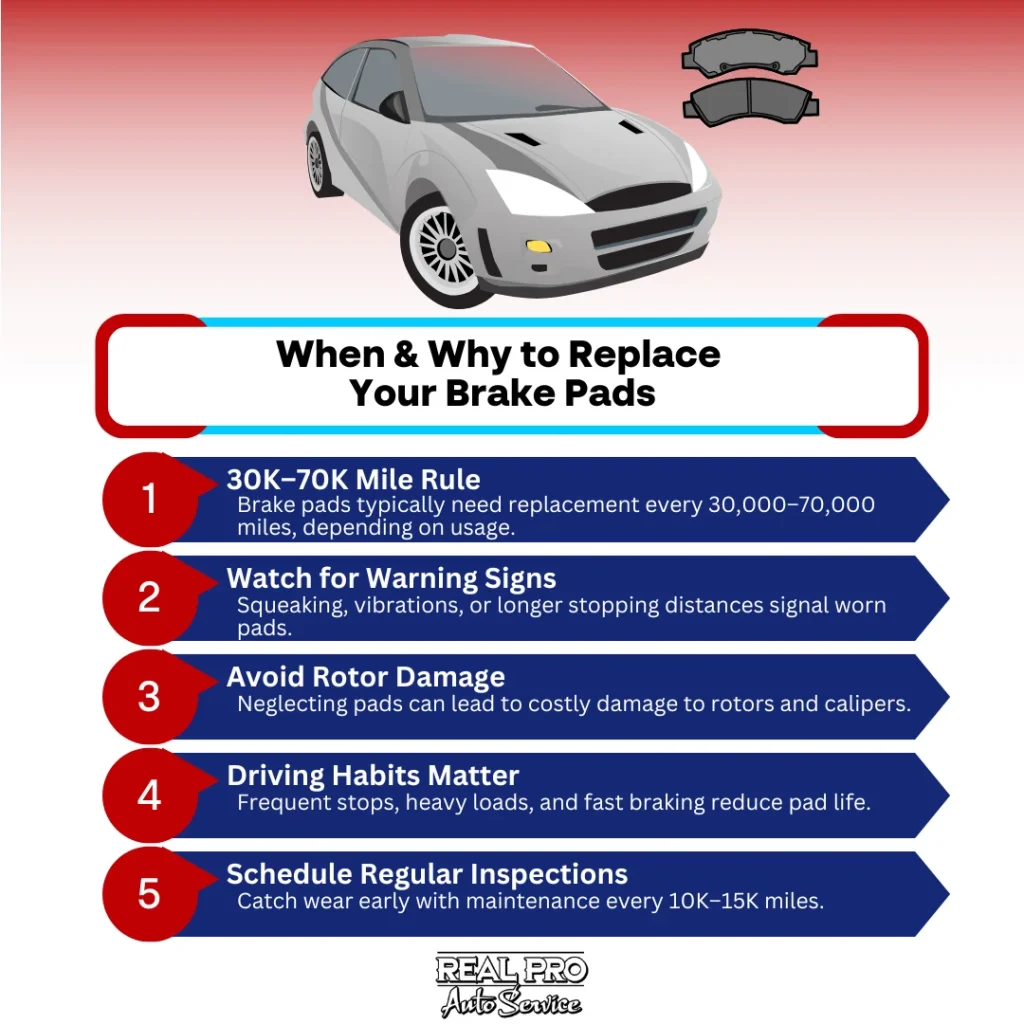
- Replace brake pads every 30,000 to 70,000 miles, depending on driving habits and vehicle type.
- Regular maintenance checks are essential for ensuring brake safety and identifying wear early.
- Driving conditions, like stop-and-go traffic or hilly terrain, significantly influence replacement frequency.
- Neglecting worn brake pads can lead to dangerous situations and costly repairs to rotors and calipers.
- To extend brake pad life, avoid sudden stops and maintain a safe distance from vehicles ahead.
Understanding Brake Pad Lifespan
Understanding the lifespan of your brake pads is vital for safe driving. Several factors influence how quickly they wear down, including your driving habits and the type of vehicle you own.
It’s also essential to take into account manufacturer recommendations for replacement intervals to keep your brakes in top shape.
Factors Influencing Brake Pad Wear
When it comes to brake pad wear, several factors play an essential role in determining how long they last. Your driving habits greatly impact brake pad longevity; frequent hard braking can wear them down faster.
The type of brake pads you choose also matters—ceramic pads typically last longer than semi-metallic ones.
Additionally, the vehicle’s weight and the conditions you drive in, like stop-and-go traffic or hilly terrain, can influence how often brake pads need to be replaced.
On average, you might find that brake pads last between 30,000 and 70,000 miles, but this varies based on the factors mentioned. Regular maintenance checks can help you stay ahead and guarantee your vehicle’s safety.
For more details, read about brake pads vs rotors and when to replace them to understand the complete braking system.
Manufacturer Recommendations for Replacement Intervals
Most manufacturers recommend replacing brake pads every 30,000 and 70,000 miles, but it’s vital to consult your vehicle’s owner manual for specific guidelines. These recommendations can vary based on factors like driving habits, vehicle type, and the quality of the brake pads used.
So, when should you replace your brake pads? If you’re hearing squeaking noises, experiencing vibrations, or noticing reduced braking effectiveness, it’s a sign to check them sooner rather than later.
To guarantee your vehicle’s safety and performance, staying informed about how often you should replace your brake pads is important.
Regular inspections and adherence to manufacturer guidelines will help you maintain the best braking performance and extend the lifespan of your brake system.
Consequences of Neglecting Worn Brake Pads
Ignoring worn brake pads isn’t just a minor oversight; it can seriously compromise your vehicle’s safety and performance. When pads wear down, you risk damaging your brake rotors and calipers, leading to costly repairs.
Staying on top of brake maintenance is essential for keeping you and others safe on the road.
Impact on Vehicle Safety and Performance
Neglecting worn brake pads can greatly compromise your vehicle’s safety and performance. When your brake pads are worn, stopping distances increase, making it harder to react in emergencies.
You might find yourself wondering how often you should replace your brakes; regular checks are essential. If you let worn pads go too long, you could face a loss of braking power, leading to dangerous situations on the road.
So, how often do you have to change your brake pads? It typically depends on your driving habits, but listening for squeaking and feeling for vibrations can indicate it’s time for a replacement.
Prioritizing brake maintenance guarantees your vehicle remains safe and reliable, ultimately enhancing your driving experience.
If you need professional service, consider scheduling brake pad replacement at our Grand Rapids location for expert care and quality parts.
Potential Damage to Brake Rotors and Calipers
If you don’t replace worn brake pads in a timely manner, you risk causing significant damage to your brake rotors and calipers.
When brake pads wear down, they can allow metal-on-metal contact, leading to grooves and warping in the rotors. This not only affects braking efficiency but can also necessitate costly rotor replacements.
So, how often should you change your brake pads? Depending on your driving habits, it’s generally advised to check them every 10,000 to 15,000 miles.
Additionally, should you replace all brake pads at once? Yes, it’s often smart to do so for balanced braking and to avoid uneven wear, which can further damage your braking system.
Learn more about the complete guide to brake fluid maintenance to keep your entire braking system in optimal condition.
Best Practices for Extending Brake Pad Life
To keep your brake pads in top shape, it’s essential to reflect on your driving habits and schedule regular inspections. Avoiding sudden stops and excessive speed can significantly extend their lifespan.
Additionally, having a professional check your brake system regularly helps catch any issues before they become serious problems.
Driving Habits That Preserve Brake Health
Maintaining healthy brake pads largely depends on your driving habits, as smarter choices can significantly extend their lifespan.
To preserve brake health, avoid sudden stops and hard braking, which generate excessive heat and wear. Instead, anticipate traffic signals and slow down gradually.
Keeping a safe distance from the vehicle ahead allows you to brake more gently. If you often drive in stop-and-go traffic, consider how frequently you should change brake pads, as this can accelerate wear.
Additionally, avoid carrying unnecessary weight in your car, as it can strain your brakes.
Regularly checking your brakes will help you determine how often you should replace your brakes on your car, ensuring they remain effective and safe.
Importance of Regular Brake System Inspections
Regular brake system inspections play an essential role in ensuring your vehicle’s safety and performance. By regularly checking your brakes, you can catch issues before they become serious problems, extending the life of your brake pads.
So, how often do you have to replace your brake pads? It varies, but inspections can help determine their condition and when replacement is necessary.
You might wonder, should I replace all brake pads at once? It’s often recommended for even wear, but a thorough inspection will guide your decision.
Keep up with these inspections to maintain peak braking performance, ensuring your safety and potentially saving you money in the long run. Don’t wait for warning signs—be proactive!
Additionally, understanding brake fluid and its important is crucial for comprehensive brake system care.
Frequently Asked Questions
What Are the Signs of Worn Brake Pads?
You’ll notice signs of worn brake pads like squeaking, grinding noises, or a soft brake pedal. If your vehicle pulls to one side or the dashboard warning light activates, it’s time to get them checked.
Can I Replace Brake Pads Myself?
If you’re handy, replacing brake pads yourself can be a piece of cake. Just make sure you’ve got the right tools and knowledge. Otherwise, it might be better to leave it to the pros.
How Much Do New Brake Pads Typically Cost?
New brake pads typically cost between $100 and $300 per axle, depending on your vehicle and the quality of the pads. It’s wise to factor in installation fees if you’re not doing it yourself.
Should I Replace Rotors With Brake Pads?
When replacing brake pads, it’s often a good idea to replace the rotors too, especially if they’re worn or damaged. Doing so guarantees maximum braking performance and longevity for your vehicle’s braking system.
Are All Brake Pads the Same Quality?
Not all brake pads are of the same standard; some may not withstand heavy use. To guarantee safety and optimal performance, select high-quality brake pads that allow for a smooth stop whenever necessary.
Is it OK to just replace brake pads?
Often, it is acceptable to replace only the brake pads.
If the brake rotors are still in good condition—meaning they are not warped, cracked, or worn below the manufacturer’s minimum thickness specification—they do not need to be replaced.
A technician will often inspect the rotors during a brake job and may recommend resurfacing them. Resurfacing creates a smooth, even surface for the new pads to contact, which helps ensure quiet and effective braking.
However, if the rotors are too thin or have significant damage, they must be replaced.
Replacing only the pads when the rotors are in good shape is a common and cost-effective way to maintain your braking system.
What happens if you wait too long to change your brakes?
Waiting too long to change your brake pads can lead to several serious consequences.
First and foremost, it is a major safety risk. As the pad material wears away completely, your ability to stop the car is significantly reduced, especially in emergencies.
You will likely hear a loud grinding noise, which is the sound of metal-on-metal contact between the brake caliper and the rotor. This not only sounds terrible but also causes severe damage to the rotors, turning a relatively inexpensive brake pad replacement into a much more costly repair that includes new rotors.
For drivers throughout the Grand Rapids Chamber of Commerce area, staying on top of brake maintenance is essential for safety.
In extreme cases, it can also damage the brake calipers, adding even more to the repair bill.
Conclusion
Staying on top of your brake pad maintenance is one of the most critical responsibilities of a car owner.
It’s not just about avoiding annoying noises; it’s about ensuring your vehicle is safe for you and everyone else on the road. By now, you should have a clear understanding of how often to check your brakes and what signs to look for. Don’t let maintenance slide.
Adopting better driving habits and scheduling regular inspections will not only extend the life of your brake pads but also give you peace of mind.
When you notice a potential issue, the best next step is to have a professional technician take a look.
Taking action early is the key to safe driving and avoiding expensive repairs. For trusted brake services, contact Real Pro Auto Service.