
What Happens If You Skip an Oil Change?
If you skip an oil change, your engine can get damaged fast. Old oil gets dirty and thick, which makes it harder for your engine parts to move smoothly.
If you skip an oil change, your engine can get damaged fast. Old oil gets dirty and thick, which makes it harder for your engine parts to move smoothly. This causes friction, overheating, and sludge buildup, which can clog your engine and lead to expensive repairs. Regular oil changes keep everything clean, cool, and running like it should.
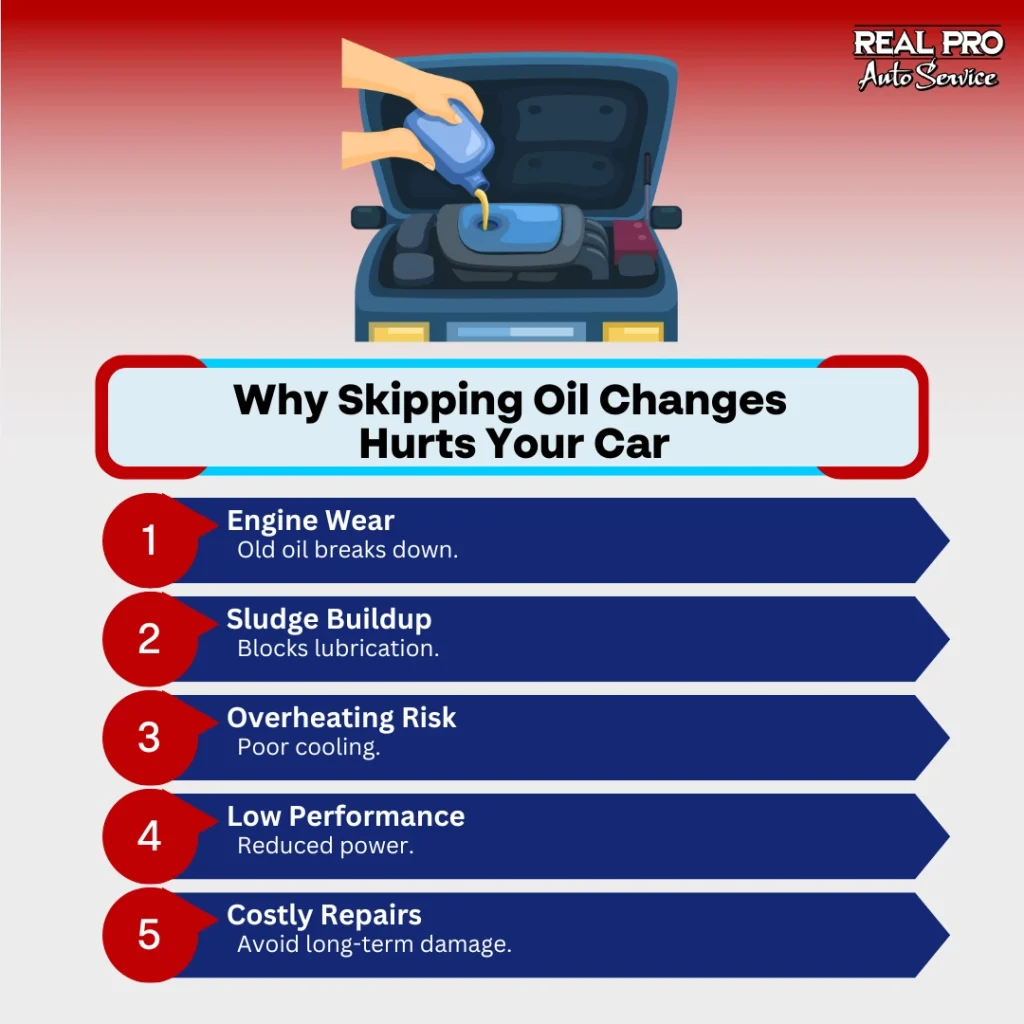
When you skip an oil change, the oil in your engine can break down over time, losing its ability to lubricate effectively. This degradation can lead to dangerous sludge buildup, which clogs essential engine components. As a result, you might notice increased wear and potential damage to your engine, leading to costly repairs down the line.
As oil ages, it loses its ability to lubricate effectively, which can lead to increased engine wear and damage. Over time, the oil breaks down, losing its viscosity and becoming less effective at reducing friction between moving parts. This can result in engine damage from old oil, as metal components begin to grind against each other, causing premature wear and potential failure. Regular oil service is essential for maintaining your engine’s health, as it ensures that fresh oil consistently protects critical parts. Skipping oil changes means you’re risking your engine’s longevity and performance. Don’t let old oil compromise your vehicle; prioritize timely oil changes to keep everything running smoothly and efficiently.
Old oil not only loses its lubricating properties but can also lead to sludge buildup, which poses significant risks to your engine. When oil sludge accumulates, it can block crucial oil passages, restricting flow and causing loss of lubrication. This lack of proper lubrication increases friction between engine components, leading to accelerated wear and potential damage. The risks of oil sludge buildup include overheating, decreased engine performance, and, in severe cases, complete engine failure. Failing to perform regular oil changes makes your vehicle vulnerable to these issues, ultimately resulting in costly repairs. To avoid these dangers, stay proactive with your maintenance schedule and guarantee your engine runs smoothly for years to come.
Skipping an oil change can seriously hurt your engine’s performance and efficiency. Without proper lubrication, your engine’s components can overheat, leading to reduced power and lower fuel economy. You may notice your vehicle struggling to deliver the power you expect, resulting in higher fuel costs at the pump.
When you neglect regular oil changes, you’re putting your engine at risk of reduced lubrication, which can lead to overheating. The oil in your engine not only lubricates moving parts but also helps dissipate heat. Without fresh oil, friction increases, causing your engine to work harder and run hotter. You may notice overheating engine symptoms, such as a rising temperature gauge, unusual odors, or even steam emanating from under the hood. The consequences of missing oil changes can be severe, leading to costly repairs or even engine failure. By staying on top of oil changes, you can guarantee your engine remains well-lubricated and operates efficiently, avoiding the headaches that come with overheating. Don’t wait until it’s too late!
Neglecting regular oil changes can lead to lower fuel economy and diminished power output in your vehicle. When you skip those recommended oil change intervals, your engine oil can become dirty and thick, making it harder for your engine to run smoothly. This lack of proper lubrication forces your engine to work harder, which can result in increased fuel consumption. You might notice that your car isn’t as responsive as it used to be, affecting your overall driving experience. By regularly checking and maintaining your vehicle’s oil levels, you can help ensure peak performance. Don’t wait until you feel a drop in power; prioritize those oil changes to keep your engine running efficiently and your fuel economy in check.
If you skip an oil change, you could end up facing expensive repairs that could’ve been easily avoided. Neglecting routine maintenance can lead to damaged engine parts, which only adds to your long-term costs. By staying on top of your oil changes, you can keep your engine running smoothly and save money down the road.
Skipping regular oil changes can lead to severe engine damage, ultimately forcing you to replace costly parts. Without proper oil, your engine’s components can wear down quickly, leading to significant issues. You might find yourself facing:
When regular oil changes are overlooked, the long-term financial implications can be staggering. Ignoring the signs you need an oil change can lead to significant engine wear and expensive repairs down the line. Sludge buildup and decreased lubrication can cause components to fail, turning a simple oil change into a costly engine rebuild. You might think skipping a few changes saves money, but the opposite is true. Investing in routine maintenance guarantees your vehicle runs efficiently and prolongs its lifespan, leading to long-term maintenance savings. By keeping up with oil changes, you not only protect your engine but also avoid the hefty repair bills that come with neglecting this essential service.
Regular oil changes are essential for keeping your engine running smoothly and efficiently. At Real Pro Auto, we recognize how oil protects your engine by providing necessary lubrication and reducing wear and tear. Choosing between synthetic and conventional oil can be intimidating, but our ASE-certified technicians are here to help you make the best choice for your vehicle.
Regular oil changes are essential for maintaining engine health, as they provide lubrication and minimize wear and tear. Our ASE-certified technicians guide you in choosing the right oil.
Here’s what regular oil changes can do for you:
Don’t wait until it’s too late! Make oil changes a priority to prevent costly repairs down the road. Trust Real Pro Auto to keep your vehicle in top shape with our expert service and commitment to quality care.
You should change your oil every 3,000 to 5,000 miles, depending on your vehicle’s make and model, as well as the type of oil used. Regular changes help maintain engine performance, so check your owner’s manual for specific recommendations tailored to your car.
You can switch oil types between changes, and it’s often necessary for specific vehicles. Just make sure to consult your owner’s manual or a trusted mechanic to confirm it’s compatible with your engine’s requirements.
You’ll need an oil change if you notice a dark, gritty texture in your oil, a warning light on your dashboard, excessive engine noise, or if your oil level is consistently low.
Yes, synthetic oils are generally better than conventional oils. It offers superior protection, improved engine performance, and longer intervals between changes. You’ll notice enhanced efficiency and less wear on your engine, making it a smart choice.
Yes, skipping oil changes can void your warranty. Manufacturers often require regular maintenance to keep warranties valid. It’s crucial to follow the recommended service schedule to avoid potential issues and maintain coverage on your vehicle.
Skipping an oil change is like ignoring a warning light on your dashboard; it might seem minor now, but it can lead to a breakdown down the road. Just as a tree needs water to thrive, your engine needs clean oil to function correctly. By neglecting this essential maintenance, you risk letting your vehicle wither away. Don’t let your car become a shadow of its former self—commit to regular oil changes and keep it running strong for years to come.
If you skip an oil change, your engine can get damaged fast. Old oil gets dirty and thick, which makes it harder for your engine parts to move smoothly.

Poor gas mileage happens when your car uses more fuel than it should. The main reasons are low tire pressure, dirty air filters, engine problems, and bad driving habits like speeding or idling too long.

Routine maintenance is better than emergency repairs because it helps you fix small problems before they turn into big, expensive ones.

The Ford Edge is a well-loved mid-size SUV that combines a comfortable ride with various modern features. However, like any vehicle, it can experience some recurring issues that owners should keep in mind to avoid expensive repairs.
A good used car is one that has been properly inspected (mechanically and physically), has a clean and accurate document trail, and is free from common red flags.

Find a reliable mechanic in Grand Rapids with a few basic checks to find out what separates the good from the bad.

You should check your car’s fluids about once a month to keep it running smoothly and avoid hefty repair bills.
You can increase your car’s fuel economy by keeping up with regular maintenance, driving smoothly, and cutting down on extra weight.

If you don’t change your oil regularly, you risk serious problems like engine overheating, reduced fuel efficiency, and increased emissions. Your engine has to work harder, leading to turbocharger failure and overall worse performance.

The warning signs of a failing alternator include dim or flickering lights, slow or struggling electrical parts like windows and locks, and needing frequent jump-starts. You might also hear weird noises under the hood, smell something burning, or notice your car stalling or having trouble starting.