October 20, 2025 - Real Pro Auto Service

Your car’s braking system is one of its most critical safety features, but many drivers are unclear about how it works.

Two of the most critical components are the brake pads and rotors, which work together to bring your vehicle to a stop. While they are both essential, they have different functions and wear out at different rates.

Understanding the distinction between them is key to maintaining your brakes and ensuring your car is safe to drive. Brake pads create friction, while rotors provide the surface for them to press against.

Knowing when to inspect and replace each of these parts can save you from costly repairs and give you confidence every time you get behind the wheel. This guide will explain the differences between brake pads and rotors, how to tell when they need attention, and what to expect during a replacement.

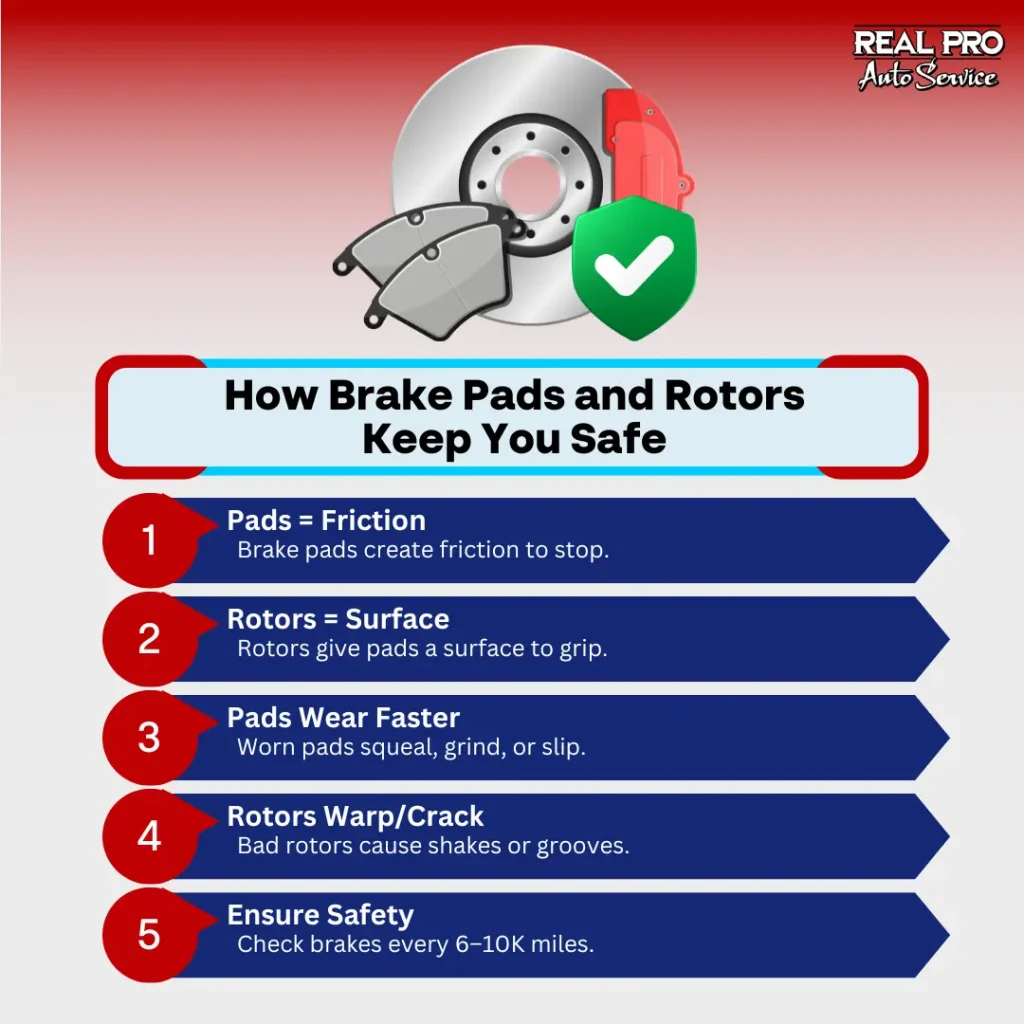
How Brake Pads and Rotors Keep You Safe: Pads = Friction - Brake pads create friction to stop. Rotors = Surface - Rotors give pads a surface to grip. Pads Wear Faster - Worn pads squeal, grind, or slip. Rotors Warp/Crack - Bad rotors cause shakes or grooves. Ensure Safety - Check brakes every 6-10K miles.

Key Takeaways

Understanding Brake Pads and Rotors

When it comes to your vehicle’s braking system, understanding brake pads and rotors is essential. Brake pads create the friction needed to stop your car, while rotors provide the surface for that interaction. Knowing how these components work together can help you maintain your vehicle’s safety and performance.

What brake pads do

Brake pads play an essential role in your vehicle’s braking system by creating the necessary friction to slow down or stop your car effectively. As vital brake system components, they press against the rotors when you engage the brakes, generating the friction needed to halt your vehicle. Made from materials like organic, semi-metallic, or ceramic, brake pads are designed to withstand high heat and stress. Over time, they wear down due to constant use, leading to decreased braking performance.

You should regularly inspect your brake pads for wear and replace them when they’re worn to maintain peak safety. Keeping an eye on these components guarantees your vehicle stops smoothly and reliably when you need it most.

Learn more about how often you should replace your brake pads to stay ahead of wear and tear.

What rotors do

Rotors are another key component of your vehicle’s braking system, working in tandem with brake pads to guarantee effective stopping power. When you press the brake pedal, the brake pads clamp down on the rotors, creating the friction needed to slow or stop your vehicle.

This interaction is essential for safety, as well-maintained rotors secure consistent performance. If they become warped or worn, you might experience vibrations or decreased braking efficiency, signaling it’s time for a replacement.

Understanding the difference between brake pads and brake rotors can help you identify issues early. Regular inspections can prolong the life of both components, keeping your vehicle safe on the road and enhancing your driving experience.

Key Differences Between Brake Pads and Rotors

When it comes to brake pads and rotors, understanding their key differences is essential for your vehicle’s performance. You’ll find that the materials and design of each component play a significant role in how effectively they work together to stop your car.

Let’s explore these differences to guarantee your brakes are functioning at their best.

Materials and design

Understanding the materials and design of brake pads and rotors is essential for maintaining your vehicle’s braking system. Brake pads are typically made from organic, metallic, or ceramic materials, each offering varying levels of performance and durability. Organic pads are quieter but wear faster, while metallic pads provide better heat dissipation. On the other hand, rotors are usually constructed from cast iron or carbon composite, designed to withstand high temperatures and friction.

For effective brake maintenance tips, pay attention to the wear on both components. If you notice vibrations or unusual noises, it could be a sign that either your pads or rotors need replacing.

Regular inspections can help you catch issues early and guarantee peak braking performance. For comprehensive information, read the complete guide to brake fluid maintenance as part of your overall brake care routine.

How do they work together to stop your car?

The braking system in your vehicle relies on the seamless interaction between brake pads and rotors to bring your car to a halt.

When you press the brake pedal, hydraulic force pushes the brake pads against the rotors, creating friction. This friction slows down the rotor, which is connected to your wheels, ultimately stopping your vehicle.

The key differences between pads and rotors lie in their roles: brake pads are responsible for generating the necessary friction, while rotors provide the surface that the pads grip against.

Understanding how these components work together is essential for effective braking performance and safety. Regular maintenance guarantees both parts function at their best, preventing wear and enhancing your driving experience.

You might notice some signs that indicate it’s time to replace your brake pads. If you hear squealing or grinding noises when braking, or if your vehicle’s braking performance feels reduced, it’s essential to take action.

Ignoring these warning signs can lead to more serious issues, so staying alert is key.

Signs It’s Time to Replace Your Brake Pads

You might notice some signs that indicate it’s time to replace your brake pads. If you hear squealing or grinding noises when braking, or if your vehicle’s braking performance feels reduced, it’s essential to take action.

Ignoring these warning signs can lead to more serious issues, so staying alert is key.

Squealing or grinding noises

When your brakes start making squealing or grinding noises, it’s often a clear sign that your brake pads need replacing. These sounds are warning signs, indicating that the pads are worn down.

The squealing noise usually comes from a metal indicator designed to alert you that it’s time for a change. If you hear grinding, it may mean the pads are completely worn and metal is scraping against metal, risking damage to your rotors.

Ignoring these sounds can lead to more extensive repairs, so don’t hesitate to have your brakes checked. Keeping an ear out for these noises guarantees your vehicle stays safe and reliable on the road.

If you need professional assistance, consider scheduling a brake pad replacement service in our Grand Rapids shop for expert care.

Reduced braking performance

As your brake pads wear down, you might notice a significant reduction in braking performance, which can compromise your safety on the road. Ignoring these signs can lead to more severe issues, so keep an eye out for the following indicators:

Addressing reduced braking performance promptly guarantees your safety and the longevity of your vehicle.

Signs It’s Time to Replace Your Rotors

When you’re braking, any vibrations or pulsing could be a sign that your rotors need replacing. Also, keep an eye out for visible grooves or damage on the rotor surface. Ignoring these issues can lead to decreased braking performance and safety risks.

Vibrations or pulsing when braking

One of the most noticeable signs that it’s time to replace your rotors is experiencing vibrations or pulsing when you brake.

This issue can compromise your safety and indicate that your rotors might be warped or unevenly worn. If you notice these vibrations, it’s vital to address them promptly. Here are some things to keep in mind:

Don’t ignore these signals; getting your rotors checked can guarantee a smoother, safer ride.

Visible grooves or damage

Vibrations or pulsing during braking can be a clear indicator of rotor issues, but visible grooves or damage on the rotors themselves are another significant sign that replacement is necessary. When you inspect your rotors, look for any noticeable grooves or scoring.

These imperfections can affect your braking performance and lead to warped rotor symptoms, such as uneven wear on your brake pads. If you spot any cracks or deep grooves, it’s essential to address them promptly.

Ignoring these signs can compromise your safety and lead to more extensive repairs down the line. Regular inspections can help you catch these issues early, ensuring your vehicle remains safe and efficient on the road.

Please don’t wait until it’s too late!

Keeping Your Braking System in Top Shape

To keep your braking system in top shape, regular inspections are key. You should check your brake pads and rotors around every 10,000 miles or as your vehicle manufacturer recommends.

Staying on top of these checks can help prevent costly repairs down the road and guarantee your safety on the road.

Why routine inspections matter

While you might think your braking system is functioning perfectly fine, routine inspections are essential for guaranteeing your safety on the road.

Regular checks can help you identify issues early, like when to replace brake rotors, helping you avoid costly repairs later. Here’s why these inspections matter:

Additionally, understanding brake fluid and why it’s important is crucial for maintaining optimal braking system health.

How often to check pads and rotors

Maintaining your braking system is essential for your safety, so knowing how often to check your brake pads and rotors can help prevent unexpected issues. Generally, it’s a good idea to inspect your brake pads and rotors every 6,000 to 10,000 miles.

This frequency allows you to catch wear early and guarantees you know how long brake pads last before needing replacement. If you notice any unusual sounds, vibrations, or a decrease in braking performance, it’s wise to check them sooner.

Remember, factors like driving habits and road conditions can affect wear, so stay proactive. Regular inspections will keep your braking system in top shape and help extend the life of your pads and rotors.

Get Expert Brake Service at Real Pro Auto

When it comes to your vehicle’s brake system, you shouldn’t settle for anything less than expert care. At Real Pro Auto, our ASE-certified technicians are ready to provide outstanding brake services to keep you safe on the road.

We recognize that the cost to replace pads and rotors can be a concern, which is why we offer transparent pricing and reliable solutions. Serving the Grand Rapids, MI, community and surrounding areas, here’s what you can expect when you choose us:

Trust Real Pro Auto for your brake service needs, and drive with confidence knowing your vehicle is in capable hands!

Frequently Asked Questions

Can I Replace Brake Pads Without Changing the Rotors?

Yes, you can replace brake pads without changing the rotors, as long as the rotors are in good condition and within specification. Just make sure to inspect them for wear and any surface damage.

How Often Should I Check My Brake System?

You should check your brake system every 6 months or during regular service intervals. If you notice unusual sounds or decreased performance, it’s best to get it inspected sooner to guarantee your safety.

Can Driving Habits Affect Brake Wear and Tear?

Yes, your driving habits can significantly affect brake wear. If you frequently brake hard or drive in stop-and-go traffic, you’ll likely wear out your brakes faster than someone who drives smoothly and steadily.

Should I replace brake pads and rotors at the same time?

It is often recommended to replace brake pads and rotors at the same time, but it is not always necessary.

The general rule is to replace the rotors every time you replace the pads, or at least every other time.

New brake pads need a smooth, flat surface to bed in properly, and installing them on old, grooved, or warped rotors can lead to uneven wear, reduced stopping power, and annoying vibrations.

How much does it cost to replace brake pads and rotors?

The cost to replace brake pads and rotors can vary widely depending on several factors, including the make and model of your vehicle, the quality of the parts you choose, and the labor rates in your area.

For a typical passenger car, you can expect to pay anywhere from $250 to $600 per axle (front or rear).

Conclusion

Your safety on the road depends on the health of your braking system, and both brake pads and rotors are essential players.

By staying on top of your brake health, you are investing in your vehicle’s longevity and, more importantly, your own peace of mind. When you are ready for an inspection or replacement, seeking professional service will guarantee the job is done right, keeping you safe on your journeys.

Visit Real Pro Auto in Grand Rapids for comprehensive auto repair and brake services.

Don’t take your brakes for granted. Stay proactive, listen to your car, and trust a professional to keep your brake pads and rotors in top working order. A well-maintained braking system is one of the most important investments you can make in your vehicle.

Brake Pads Vs Rotors: What’s the Difference & When Should You Replace Them?

Brake pads and rotors aren’t the same—brake pads are the parts that press against the rotors to create friction and stop your car, while rotors are the big metal discs that the pads grab onto. You should replace brake pads if you hear squealing or grinding, and replace rotors if you feel vibrations or see grooves and cracks on them.

The Best Additives to Keep Your Engine Running Smoothly

To keep your engine running smoothly, consider using anti-wear, detergent, dispersant, viscosity improver, and friction modifier additives. These enhance performance by reducing friction, preventing deposits, and maintaining ideal viscosity.

5 Ways to Extend the Life of Your Clutch: Tips for Manual Drivers

If you drive a manual car, you know the clutch is essential for a smooth ride. But are you doing everything you can to protect it? Many drivers develop small habits that seem harmless but actually cause significant wear and tear on the clutch over time. From resting your foot on the pedal to shifting Read More